 (+91) 9625985065
  info@deepammeditours.com
 Blog
Expert insights for your well-being journey. Your health is our priority.
A Complete Guide to Ayurveda Treatment in India for International Clients

India is widely recognised as the birthplace of Ayurveda. This traditional healthcare system focuses on restoring balance through natural therapies and lifestyle practices. For centuries, these treatments have been practised and refined in specialised centres across the country.
Today, many international clients travel to India to experience Ayurveda in its most authentic setting. Treatments are guided by trained Ayurvedic doctors and built around personalised care. Therapies and daily routines are adapted to each individual’s health condition.
Unlike spa-style wellness experiences, Ayurvedic treatment in India follows a structured medical process. It begins with a detailed diagnosis aimed at identifying the root cause and fixing it for long-term improvement.
This guide explains what Ayurveda treatment in India involves and what international clients should know before planning their visit.
What Does Ayurveda Treatment Actually Mean in India?
Many people first encounter Ayurveda through spa menus or relaxation therapies. But clinical Ayurveda in India is very different. It is a physician-guided medical system where treatment begins with a detailed consultation. The doctor studies your symptoms, lifestyle patterns, digestion, sleep, and stress levels before recommending a plan.
This assessment shapes a personalised treatment programme. It may include therapeutic procedures and herbal formulations. Each step aims to support the body’s natural recovery.
This clinical approach is one reason international clients choose treatment in India.
Planning Your Ayurveda Treatment (Step-by-Step)
Many Ayurveda centres have qualified Ayurvedic doctors who supervise consultations, treatment plans, and therapy protocols. Clients often seek care for ongoing concerns such as stress disorders, metabolic imbalance, digestive problems, and persistent fatigue. Here’s how the process works:
Your First Step: Medical Assessment (Day 1–2)
The first two days of an Ayurveda programme focus on understanding your health status. After arrival, you meet an Ayurvedic doctor for a comprehensive consultation to assess your overall well-being.
Initial Health Consultation
During this consultation, the doctor reviews several aspects of your health, including:
- Current symptoms and past medical history
- Sleep patterns and digestion
- Stress levels and emotional well-being
- Daily routines and lifestyle habits
- Nadi Parikshan or pulse diagnosis, a traditional Ayurvedic assessment method used to understand internal imbalances
This discussion helps the physician build a clear picture of how your body has been functioning over time.
Understanding Your Body Constitution
The doctor also evaluates your body constitution, which in Ayurveda refers to your natural balance of physical and metabolic tendencies.
This helps the physician understand:
- Why do certain symptoms appear more easily for some individuals
- How your body typically responds to diet, stress, and environmental factors
Based on the consultation and constitutional analysis, the doctor develops a tailored treatment plan.
| Why Personalisation Matters?Personalisation is a core principle of Ayurvedic care. Two individuals with similar symptoms may receive different therapies because their body constitution and lifestyle patterns vary. This individualised approach ensures the treatment addresses the root cause of imbalance. |
The Core Treatment: Detoxification and Repair
Once the assessment is complete, the treatment phase begins. Most Ayurvedic programmes focus on gentle detoxification followed by restorative therapies. The aim is to support the body’s natural repair processes while improving digestion and energy balance.
International clients commonly get recommended a combination of the following therapies.
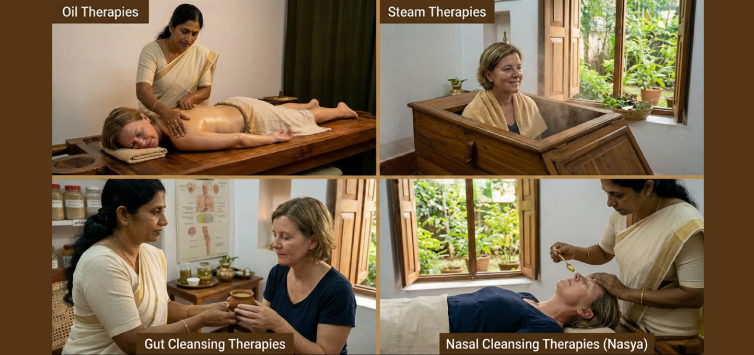
Oil Therapies
Medicated oils are applied through specialised massage techniques. These therapies help relax muscles and calm the nervous system. They are often recommended for joint discomfort and stress-related symptoms.
Steam Therapies
Herbal steam treatments usually follow oil applications. The warmth helps open skin pores and supports the body’s natural detox pathways. Many clients notice improved mobility and a sense of lightness after these sessions.
Gut Cleansing Therapies
Digestive balance is a central focus in Ayurveda. Certain treatments are designed to gently clear the digestive tract and support better nutrient absorption. These are carefully supervised by doctors and adjusted to each client’s condition.
Nasal Cleansing Therapies
Nasal therapies involve the use of herbal oils or preparations placed through the nasal passages. They are commonly used to support sinus health and mental clarity.
Daily Life During Your Stay
An Ayurveda treatment programme follows a calm and structured daily routine. The focus is on allowing the body enough time to respond to therapies while maintaining gentle activity and proper nourishment.
A typical day often includes:
- Doctor rounds: The physician reviews your progress regularly. They may adjust therapies or medicines depending on how your body responds. This ongoing supervision ensures that the treatment remains appropriate for your condition.
- Therapy sessions: Clients usually receive one or two therapies each day. These sessions are performed by trained therapists under medical guidance. The duration and type of therapy depend on the treatment plan prepared during the initial assessment.
- Food and herbal medicines: Meals are simple and easy to digest. The diet supports the digestive system, which Ayurveda considers central to recovery. Herbal preparations are often given alongside meals to support the treatment process.
- Rest and gentle yoga: Recovery also requires quiet time. Clients are encouraged to rest between therapies and avoid heavy physical activity. Light yoga or short walks may be included to maintain flexibility and support relaxation.
How Long Should You Stay?
The length of your stay often depends on your health goals and the condition being addressed.
7-day stay
A one-week programme is often suitable for rest and stress relief. It can help improve sleep, reduce fatigue, and introduce you to Ayurvedic routines. However, this duration is usually considered a wellness experience rather than a full medical treatment.
14 to 28-day stay
For chronic concerns or metabolic imbalance, doctors often recommend longer programmes. This time allows the body to move through detoxification, followed by restorative therapies. Clients also have enough time to adapt to dietary changes and daily routines.
Choosing the Right Ayurveda Centre in India
Selecting the right centre is an important step for international clients. A genuine Ayurvedic programme depends primarily on medical guidance and the environment in which recovery takes place. When reviewing centres in India, you may consider the following factors.
Medical Supervision
Ensure treatments are guided by qualified Ayurvedic doctors. A reliable centre provides consultations and monitors progress.
Treatment Authenticity
Look for centres that follow traditional treatment protocols rather than offering only relaxation services. NABH accreditation or recognised wellness certifications can be a strong sign of quality and safety. Established retreats often provide structured programmes such as detox therapies and chronic disease care.
Hygiene and Safety
Clean therapy rooms and proper medical oversight are essential. International clients should feel confident about treatment standards and client care.
Post-Treatment Guidance
Good centres provide advice on lifestyle and herbal support after your stay. This helps maintain the progress achieved during the programme.
Location and Recovery Environment
A calm, natural setting can support healing. Many respected Ayurveda retreats in India are located in peaceful regions such as the Himalayas, coastal Kerala, or quiet green valleys. These environments allow clients to rest and step away from daily stress.
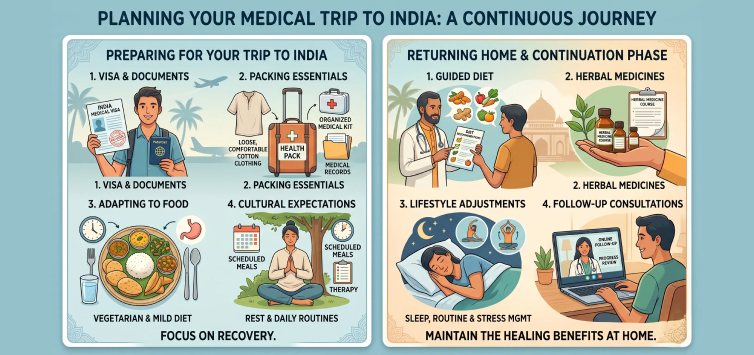
Planning Your Medical Trip to India
Preparing well for your trip makes the treatment experience smoother and more comfortable. A few practical steps can help international clients settle in quickly and focus on recovery.
Visa and Travel Documents
Most clients travel on a medical or medical attendant visa. This allows a longer stay for treatment and follow-up care. It is best to confirm visa requirements before booking your programme.
What To Pack
Bring loose, comfortable clothing suitable for warm weather and therapy sessions. Personal medications and medical records are also helpful for the doctor during your consultation.
Food Adjustment
Ayurvedic centres usually serve vegetarian meals designed to support digestion during treatment. Meals are mild and based on local ingredients. It may take a few days for the body to adjust to this dietary style.
Cultural Expectations
India’s wellness centres often follow quiet daily routines. Clients are encouraged to rest and eat at scheduled times, and to avoid strenuous activities during the treatment period.
Safety and Comfort for Solo Travellers
Many centres host international guests and provide multilingual staff. They also offer secure on-site accommodation and round-the-clock assistance.
After You Go Home: The Continuation Phase
Ayurveda treatment does not end when you leave the centre. The weeks after your return are an important part of the healing process.
Most clients receive clear guidance before departure. This usually includes:
- Diet recommendations: Doctors often suggest simple dietary habits that support digestion and maintain balance.
- Herbal medicines: Short courses of herbal preparations may be prescribed to continue the therapeutic effect started during treatment.
- Lifestyle adjustments: Changes in sleep, daily routine, and stress management help protect the progress achieved during the programme.
- Follow-up consultations: Some centres offer online follow-ups, allowing doctors to review symptoms and make small adjustments if needed.
Long-term improvement depends on how consistently these recommendations are followed. The treatment begins in India, but the real benefit grows as these habits continue at home.
How Deepam Helps International Clients?
Planning treatment in another country can feel complex, especially when online results do not always reflect actual quality. Deepam helps international clients make this decision with greater clarity and confidence.
Before travel, the team reviews your health details and identifies suitable Ayurveda centres in India based on your requirements. These recommendations are guided by careful research along with centre evaluation and real client feedback.
Deepam also supports practical arrangements such as treatment planning and travel coordination. During the stay, assistance remains available whenever needed.
After the programme, support continues through follow-up consultations and ongoing care guidance. This end-to-end support helps clients focus on healing while making informed choices at every stage of the journey.
Is Ayurveda Treatment in India Right for You?
Ayurveda treatment in India can be a meaningful option for people seeking a deeper approach to health recovery and long-term wellness. Its strength lies in addressing the root cause of imbalance rather than only managing visible symptoms. This makes it especially relevant for people looking for more sustainable improvement.
You may benefit most if you:
- Have long-term health concerns that need a lifestyle-based approach
- Feel persistent fatigue or digestive imbalance
- Want treatment that focuses on underlying causes, not just short-term symptom relief
- Prefer a structured wellness programme over a short relaxation retreat
It is also helpful to consult a medical professional before booking if you have serious medical conditions or ongoing treatments.
For many international clients, proper guidance makes the journey easier. Deepam Meditour helps travellers explore trusted Ayurveda centres and plan their visit with clarity.
To learn more about available programmes and partner centres in India, you can explore here.
FAQs
1. Is Ayurveda treatment in India suitable for international clients?
Yes, many Ayurveda centres in India regularly treat international clients. Most reputed centres have trained doctors and staff who are familiar with international healthcare expectations. They also provide structured treatment programmes that include consultations and follow-up guidance.
2. How do I know if an Ayurveda centre in India is trustworthy?
Check whether the centre has qualified Ayurvedic doctors, follows proper treatment protocols, and preferably holds NABH accreditation or similar recognised certifications. Client reviews and testimonials can also offer useful insight into real treatment experiences. Choosing a trusted medical travel partner like Deepam Meditour adds greater confidence to the process. Programs are curated through careful centre evaluation, client feedback, and treatment suitability checks.
3. How long should international clients stay for Ayurveda treatment?
The recommended duration depends on the health concern being addressed. Short stays of around one week are usually suitable for relaxation and mild stress relief. Therapeutic programmes often last between two and four weeks. This duration allows enough time for detoxification and recovery therapies to work gradually and effectively.
4. What kind of food is served during Ayurveda treatment programmes?
Most Ayurveda centres provide vegetarian meals prepared according to Ayurvedic dietary principles. The food is usually simple and designed to support digestion during treatment. Ingredients are often locally sourced, and meals are adjusted based on the client’s treatment plan.
5. Is Ayurveda treatment safe for people travelling alone?
Yes, many international clients travel alone for treatment. Established centres typically offer structured schedules and support staff who assist clients throughout their stay. Some medical tourism facilitators also provide travel coordination and communication support to make the experience comfortable for solo travellers.
6. Can Ayurveda help with long-term health conditions?
Ayurveda is often used as a complementary approach for managing long-term concerns such as stress disorder and digestive imbalance. The treatments usually focus on improving digestion and supporting the body’s natural healing processes. However, clients with serious medical conditions should always consult both their current doctor and an Ayurvedic physician before starting treatment.
7. What happens after the treatment programme ends?
Most centres provide guidance that clients can continue at home. This may include dietary recommendations and lifestyle adjustments to maintain the treatment’s benefits. Some centres also offer online consultations so clients can review their progress and receive further advice after returning to their country.
Ayurveda Centers
Related Blogs
-
 How to Choose an Authentic Ayurveda Treatment Centre... September 9, 2026
 -
 Where Did Ayurveda Come From and Why Is... August 16, 2026
 -
 A Natural Approach to Managing Constipation with Ayurveda August 6, 2026
 -
 Can Ayurveda Help With Sports Injury Recovery? August 5, 2026
 -
 A Complete Guide to Ayurveda Treatment in India... January 5, 2026
 -
 How Diabetes Slowly Affects Your Vision Before You... December 15, 2025
 -
 How Does Ayurveda Support Bone Health as We... November 20, 2025
 -
 Can Diet Play a Role in Cancer Prevention?... October 20, 2025