(+91) 9625985065
  info@deepammeditours.com
 Blog
Expert insights for your well-being journey. Your health is our priority.
Ayurveda and Women’s Health: Addressing Hormonal Imbalances Naturally
Mood swings that feel unexplainable and cycles that refuse to stay regular are more than passing discomforts. For many women, they signal deeper hormonal imbalances that often remain hidden in plain sight. The World Health Organization reports that up to 70% of women suffering from PCOS worldwide remain undiagnosed, leaving them struggling without answers.
Ayurveda, with its emphasis on balance and interconnectedness, offers a different way of understanding these concerns. It examines how digestion (Agni), daily routines (Dinacharya), mental wellbeing, and the three Doshas shape hormonal rhythms.
In the sections ahead, we explore how Ayurveda can help restore harmony and create sustainable hormonal health.
Understanding Hormones Through the Ayurvedic Lens
Ayurveda views hormonal health as the outcome of a well-nourished reproductive system. Each hormonal function is tied to the balance of the Tridosha, which, when disturbed, leads to:
| Dosha Imbalance | Possible Manifestations |
| Vata | Irregular cycles, amenorrhea, anxiety, insomnia |
| Pitta | Heavy or painful bleeding, hot flashes, acne, irritability |
| Kapha | PCOS tendencies, weight gain, sluggish metabolism, water retention |
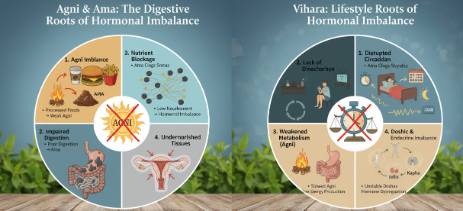
When digestion weakens, Ama (toxic byproducts of incomplete metabolism) accumulates. This obstructs the body’s srotas (channels) and disturbs hormonal signalling and tissue nourishment. From an Ayurvedic perspective, restoring Agni and clearing Ama form the foundation for long-term hormonal balance.
Root Causes of Hormonal Imbalances
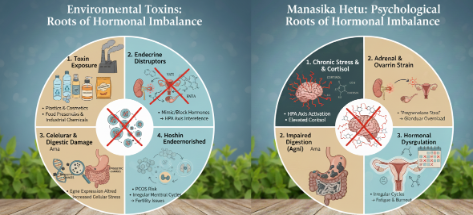
Ayurveda explains hormonal imbalance as a disturbance in the delicate interplay between diet and lifestyle.
Ahara (Dietary Factors)
Regular intake of processed foods and excessive caffeine weakens Agni. Poor digestion produces Ama that impairs nutrient delivery to reproductive tissues.
Vihara (Lifestyle Factors)
Irregular sleep patterns and lack of Dinacharya disrupt circadian alignment. This weakens metabolism and destabilises doshic balance, which is central to endocrine health.
Manasika Hetu (Psychological Factors)
Chronic stress elevates cortisol, placing strain on adrenal and ovarian function. Over time, this dysregulates menstrual cycles and contributes to mood fluctuations and fatigue.
Environmental Toxins
Constant exposure to plastics, synthetic cosmetics, and preservatives introduces endocrine-disrupting chemicals. Evidence from a study shows that heavy metals and industrial chemicals cause epigenetic changes and increase the risk of PCOS.
Genetic Predisposition and Ageing
Inherited tendencies and age-related decline, such as reduced ovarian reserve or perimenopausal transition, naturally alter hormone production. While not preventable, their impact can be eased through Ayurvedic support.
Ayurvedic Therapies for Hormonal Rebalancing
Ayurveda offers both purification and rejuvenation therapies to restore hormonal balance at its root. These interventions strengthen tissue health and improve resilience against future imbalances.
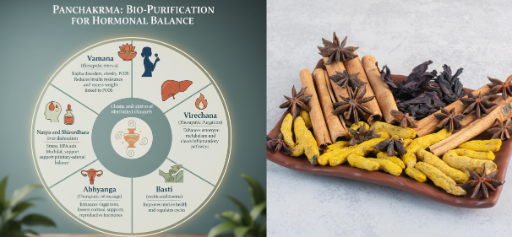
Panchakarma (Bio-Purification Therapies)
Panchakarma focuses on clearing Ama and opening obstructed channels. Each procedure is tailored to the dominant imbalance:
| Panchakarma Therapy | Primary Indication | Hormonal Relevance |
| Vamana (therapeutic emesis) | Kapha disorders, obesity, PCOS | Reduces insulin resistance and excess weight linked to PCOS |
| Virechana (therapeutic purgation) | Pitta aggravation, liver dysfunction | Enhances estrogen metabolism and clears inflammatory pathways |
| Basti (medicated enema) | Vata imbalance, amenorrhea, dysmenorrhea | Improves uterine health and regulates cycles |
| Nasya and Shirodhara | Stress, HPA axis dysfunction | Modulate cortisol, support pituitary-adrenal balance |
| Abhyanga (oil massage) | Stress, anxiety | Enhances vagal tone, lowers cortisol, supports reproductive hormones |
Recent studies suggest Panchakarma improves endocrine function, regulates gut microbiota, and reduces stress-induced hormonal fluctuations.
Rasayana (Rejuvenative Therapy)
While Panchakarma removes obstacles, Rasayana restores nourishment. Herbs and formulations are chosen based on clinical need:
- Ashwagandha: Supports adrenal health and mitigates stress-induced hormonal disruption.
- Shatavari: Enhances ovarian function and balances estrogen-progesterone levels.
- Guduchi: Modulates immunity and helps correct inflammatory causes of hormonal irregularities.
- Manjistha: Purifies blood and supports skin and reproductive health.
Classical formulations like Kumari Asava (for menstrual health), Phala Ghrita (for fertility), and Dashmoola Kwath (for uterine and pelvic health) are time-tested Rasayanas.
Diet and Nutrition for Hormonal Health
Food is one of the most powerful tools in Ayurveda to restore hormonal balance. The goal is to strengthen Agni so nutrients are absorbed efficiently.
Agni-Balancing Diet
Warm, freshly prepared meals eaten at regular times keep digestion steady. Seasonal fruits and vegetables, whole grains, pulses, and light proteins provide stability to metabolism. Cooking with ghee in moderation also enhances nutrient assimilation.
Phytoestrogen-Rich Foods
Flaxseeds and soy contain plant-based estrogens that help regulate fluctuations in estrogen levels. These foods are especially supportive during perimenopause and menstrual irregularities.
Spices as Medicine
Ayurveda values spices for their medicinal properties:
- Turmeric reduces systemic inflammation and supports liver detoxification, crucial for estrogen metabolism.
- Cinnamon improves insulin sensitivity, addressing one of the root issues in PCOS.
- Ginger enhances circulation and digestion and reduces bloating.
- Cardamom lowers inflammation and improves hormonal markers in PCOS, as shown in clinical research.
Foods To Limit or Avoid
Certain foods like dairy, refined carbohydrates, and alcohol place extra pressure on the liver and interfere with blood sugar balance. Limit their intake to support healthier metabolic function.
Lifestyle & Preventive Practices (Vihara & Dinacharya)

Ayurveda places equal weight on Vihara (lifestyle) as it does on food and medicine. Hormonal balance is sustained when daily rhythms align with the body’s natural cycles.
Circadian Alignment
The body’s endocrine system is tightly linked with circadian rhythms. Waking during Brahma Muhurta (between 4–6 AM) promotes clarity and better reproductive hormone regulation. Sleeping before 10 PM supports melatonin production and allows adrenal and thyroid function to reset overnight.
Stress Regulation
Chronic stress is one of the strongest disruptors of ovarian and adrenal hormones. Ayurveda prescribes restorative practices that calm the nervous system:

- Yoga: Gentle Hatha and restorative postures reduce cortisol and improve insulin sensitivity.

- Pranayama: Nadi Shodhana (alternate nostril breathing) balances the sympathetic and parasympathetic systems, while Bhramari lowers heart rate and anxiety.

- Meditation: Even 15 minutes of daily mindfulness reduces stress-induced endocrine fluctuations.
Daily Detox Practices
Simple daily rituals reduce Ama (metabolic toxins) and keep channels clear:
- Oil Pulling with sesame or coconut oil reduces oral bacteria linked to systemic inflammation.
- Tongue Scraping prevents toxin reabsorption and stimulates digestive enzymes.
- Dry Brushing (Garshana) improves lymphatic flow and reduces water retention, particularly in Kapha-dominant imbalances.
Digital Detox and Sleep Hygiene
Exposure to blue light after sunset suppresses melatonin and disrupts circadian alignment. Practical steps include reducing screen time 1–2 hours before bed, using amber filters when necessary, and creating a dark, cool sleep environment. Consistent wake-sleep patterns further stabilise cortisol and reproductive hormones.
The Last Line
Incorporating Ayurvedic principles can significantly improve women’s hormonal health, with natural and effective solutions. By adopting these tips and seeking professional guidance, women can achieve a balanced and healthier life.
Start integrating these Ayurvedic practices today into your daily routine. For best results, consult a professional for a personalised women’s hormone imbalance treatment.
Frequently Asked Questions (FAQs)
1. How does Ayurveda explain hormonal imbalance in women?
Ayurveda attributes hormonal imbalance to weak Agni (digestive fire), Ama (toxic buildup), and Dosha disturbances. These disrupt nutrient absorption, reproductive tissue health, and hormonal signalling.
2. Can Ayurvedic therapies like Panchakarma help with PCOS?
Yes. Panchakarma clears Ama, improves insulin sensitivity, and restores endocrine signaling. Therapies like Virechana and Basti are often recommended for PCOS and cycle regulation.
3. What foods support hormonal balance according to Ayurveda?
Warm, seasonal meals, phytoestrogen-rich foods like flaxseeds and soy, and spices such as turmeric, cinnamon, and cardamom support Agni, reduce inflammation, and regulate estrogen.
4. Which daily practices (Dinacharya) improve hormonal health?
Activities like yoga, pranayama, oil pulling, and dry brushing support metabolic stability and stress reduction. Practised regularly, they create the conditions needed for a healthier endocrine balance.
5. Are Ayurvedic herbs effective for women’s hormonal health?
Yes. Ashwagandha supports adrenal balance while Shatavari nourishes the ovaries. Guduchi herb reduces inflammation, and Manjistha purifies blood that aids in menstrual health.
6. What is the root cause of hormonal imbalances according to Ayurveda?
Ayurveda links hormonal imbalances to a combination of impaired Agni, accumulation of Ama, and long-term Dosha aggravation. Chronic stress and poor diet further disturb the mind–body axis, triggering deeper hormonal fluctuations.