 (+91) 9625985065
  info@deepammeditours.com
 Blog
Expert insights for your well-being journey. Your health is our priority.
Facial Yoga for Anti-Ageing: Can You Really Sculpt Your Skin?
You train your body to stay strong, why not your face? Facial yoga is gaining attention as a gentle, non-invasive way to lift, tone, and smooth the skin without the need for needles or surgery.
The concept is based on the idea that targeted movements can engage facial muscles, support blood circulation, and enhance skin tone. But does this lead to a tighter and more lifted appearance?
This article examines what truly changes beneath the skin as we age and how facial yoga may influence these processes. It also explores the face yoga exercises that show the most promising results.
Understanding What’s Happening Beneath the Skin Surface
Ageing in the face is more than skin-deep. It unfolds across multiple layers, each contributing to the changes we see in the mirror.
Key changes beneath the skin surface:
- Collagen and Elastin Decline – Fibroblasts slow production of these structural proteins, making the skin thinner, less elastic, and more prone to fine lines.
- Fat Pad Volume Loss and Redistribution – Cheeks lose fullness, hollows deepen, and tissue shifts downward, creating jowls and folds.
- Bone Resorption – Subtle changes in the midface and jawbone reduce the structural support that keeps soft tissues lifted.
- Muscle Atrophy – Less use of facial muscles weakens tone and decreases the stimulation needed to maintain both skin and bone health.
- Gravity and Repetitive Expressions – Years of smiling, frowning, and other habitual movements can turn dynamic lines into permanent creases.
How Does Facial Yoga Work?
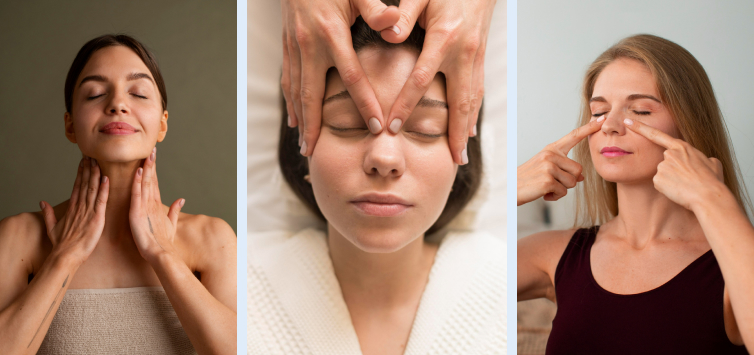
Facial yoga uses isometric holds and resistance-based actions to engage facial muscles to support the skin. Here’s how it works at a physiological level:
- Muscle Strengthening
Studies[i] using facial exercises, neuromuscular stimulation (NMES), and oscillatory devices have shown measurable increases in facial muscle size in middle-aged women. These gains occur because repeated contractions activate muscle fibres, prompting them to adapt by becoming thicker and more toned.
- Improved Circulation
Contracting facial muscles increases local blood flow. This delivers oxygen and nutrients to skin cells more efficiently. It also supports the removal of metabolic waste and promotes a healthier skin environment that may recover faster from daily stressors.
- Enhanced Muscle Mechanics
Myoton®PRO[ii] measurements show that facial yoga can improve muscle tonus, stiffness, and elasticity. These changes reflect more efficient neuromuscular connections and an optimal resting tension in muscle fibres. This helps maintain lift and reduce sagging.
- Potential Collagen Support
While evidence is emerging, mechanical forces from repeated muscle engagement may signal fibroblasts to produce more collagen. This helps preserve the skin’s internal scaffold, keeping it firmer for long.
Top Anti-Ageing Yoga Facial Exercises (With Targeted Benefits)

Facial yoga works best when done consistently and with precision. Each movement below targets specific muscle groups to help counteract the visible signs of ageing while improving underlying support and circulation.
1. Forehead Smoother
- Muscle group targeted: Frontalis muscles across the forehead.
- Benefits: Helps release tension that deepens horizontal forehead lines and frown creases. Promotes smoother skin by relaxing overactive muscles.
- How to do it: Place both hands horizontally across the forehead, fingertips just above the brows. Gently sweep fingers outward while applying light pressure. Keep the forehead muscles relaxed. Repeat 8 to 10 times, focusing on releasing any tightness.
2. Eye Opener
- Muscle group targeted: Orbicularis oculi around the eyes.
- Benefits: Reduces upper eyelid hooding, softens crow’s feet, and improves circulation to brighten the eye area.
- How to do it: Form a “C” shape with your thumb and index finger around each eye. Apply gentle pressure while opening your eyes wide, then slowly squint without fully closing them. Repeat 6 to 8 times, maintaining control.
3. Cheek Lifter
- Muscle group targeted: Zygomaticus major and minor.
- Benefits: Restores lift and fullness to the cheeks, improving mid-face contour and reducing nasolabial folds.
- How to do it: Smile as wide as possible without tensing the eyes. Place fingertips lightly on the tops of your cheeks and lift upward while maintaining the smile. Hold for 5 seconds and then relax. Repeat 10 times.
4. Smile Smoother
- Muscle group targeted: Orbicularis oris and surrounding perioral muscles.
- Benefits: Softens fine lines around the mouth, prevents downward pull at the corners, and improves muscle tone in the lower face.
- How to do it: Purse your lips together to form an “O” shape. Keeping lips in position, try to smile widely without breaking the “O.” Hold for 5 seconds, relax, and repeat 8 to 10 times.
5. Neck Firmer
- Muscle group targeted: Platysma and sternocleidomastoid muscles.
- Benefits: A simple form of face yoga for skin tightening, effective for the jawline and neck, where sagging often becomes more noticeable with age.
- How to do it: Tilt your head back and press your tongue to the roof of your mouth. Hold for 5 seconds, feeling the stretch along the front of your neck. Return to neutral and repeat 8 to 10 times.
Complementary Practices To Maximize Facial Yoga Results
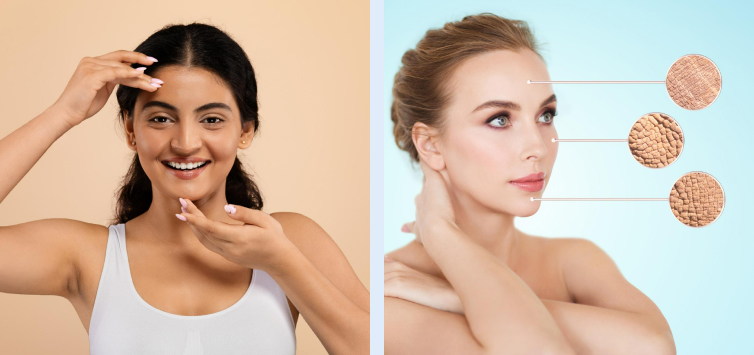
Facial yoga is most effective when paired with habits that protect and nourish the skin. These complementary practices address both the surface and deeper layers that influence ageing.
Hydration
Adequate water intake helps maintain skin elasticity and volume by supporting the dermal matrix. Well-hydrated tissue responds better to face yoga exercise, appearing plumper and more resilient.
Anti-inflammatory Diet
A diet rich in antioxidants from fruits, vegetables, nuts, and fatty fish helps curb oxidative stress, a major factor in collagen and elastin loss. By contrast, processed sugars and trans fats promote glycation, which stiffens skin proteins and accelerates wrinkle formation.
SPF Protection
Up to 90%[iii] of visible skin changes linked to ageing are caused by UV exposure. Consistent use of a daily broad-spectrum SPF helps shield collagen from UV-induced breakdown. This supports the longer-lasting benefits of facial yoga by maintaining the underlying structural proteins.
Facial Massage Tools
Gua sha and jade rollers can stimulate microcirculation, promote lymphatic drainage, and temporarily reduce puffiness. They complement facial yoga by improving nutrient delivery to active muscle tissues and aiding waste removal. Just 10 minutes of facial yoga for clear skin each morning can pair well with a consistent skincare routine for visible results over time.
Sleep and Stress Management
During deep sleep, skin repair processes peak, and collagen synthesis increases. Chronic stress, on the other hand, elevates cortisol, which can thin the skin and break down connective tissue. Practices such as meditation, breathwork, or simply maintaining a regular sleep schedule support face yoga benefits.
Sustainable Beauty Starts With Small Daily Actions
Facial yoga works best when seen as a long-term commitment. The changes are gradual, but over time, they can help your face age more gracefully by supporting muscle tone, improving circulation, and maintaining skin health.
With minimal risk and no special equipment, facial yoga is a habit worth building into your routine. If you’d like to explore other natural approaches to ageing well, explore our Ayurvedic programs here.
References
[i] Research Gate
[ii] Research Gate
[iii] United States Environmental Protection Agencyrotection Agency